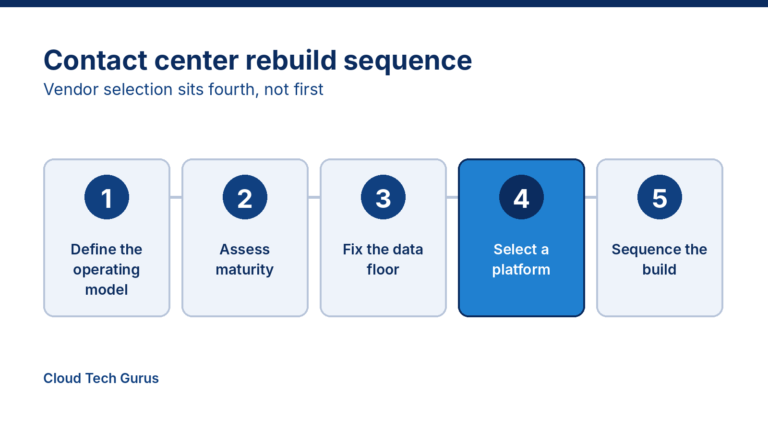
Contact center rebuilds usually fail in the first 90 days because the sequence is wrong, not the platform. Teams shortlist vendors before they define what better means, map the work, or fix their data. In 2026, define the operating model first, assess maturity, fix the data floor, then select.
Why it matters: At 500 to 10,000+ seats, a bad sequence costs quarters of rework and a lot of budget. The platform gets blamed. In our experience, it was rarely the problem.
We didn’t study contact centers. We ran them. We also made these mistakes with our own budgets before we advised anyone else on them. This post covers where the sequence breaks, the order we would use instead, and how to pressure-test any shortlist before it reaches procurement.
Key takeaways
- Order beats speed. Vendor selection belongs fourth in the sequence, not first.
- The 90-day tell is a missing definition. If nobody can state “better” as a number by week twelve, the program is already drifting.
- Three failures repeat: buying before mapping the work, outsourcing a problem you still own, and treating AI as a procurement decision.
- An auditable shortlist is the safeguard. Criteria written first, evidence cited, eliminations documented.
Why do contact center rebuilds fail in the first 90 days?
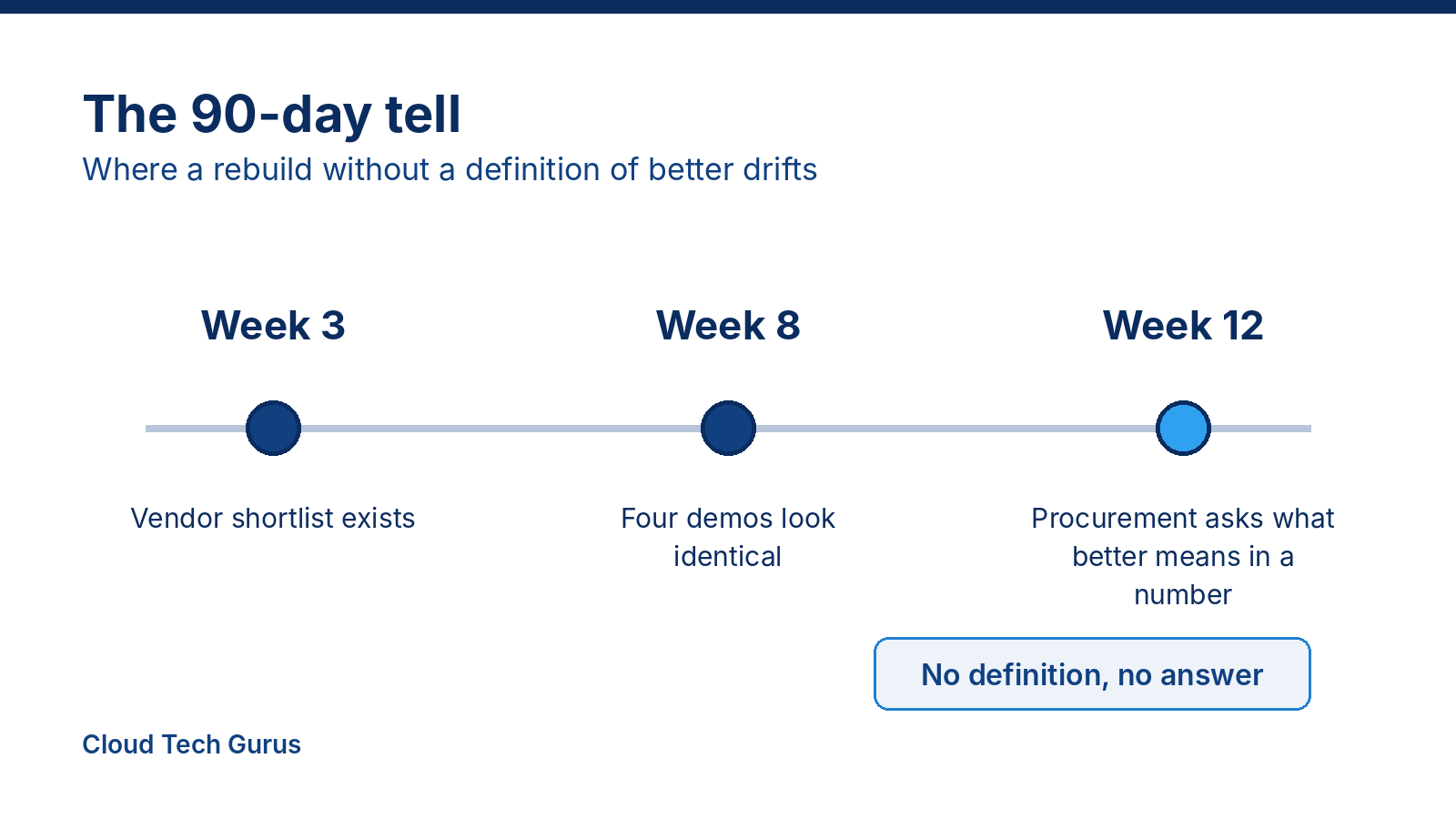
Because the sequence gets set before anyone has defined success. A mandate lands: cut cost per contact, lift CSAT, “do something with AI.” A vendor shortlist follows within weeks. Demos start to look identical. Then procurement asks what “better” means in a number, and nobody can answer without opening a deck.
That is the tell, and it shows up around week twelve. It is not a technology problem. It is the absence of a definition, and no platform can supply one.
What are the three ways the sequence goes wrong?
The same three patterns show up across enterprise estates. Each one is a sequencing error, not a vendor error.
| Failure | What it looks like | What to do first |
|---|---|---|
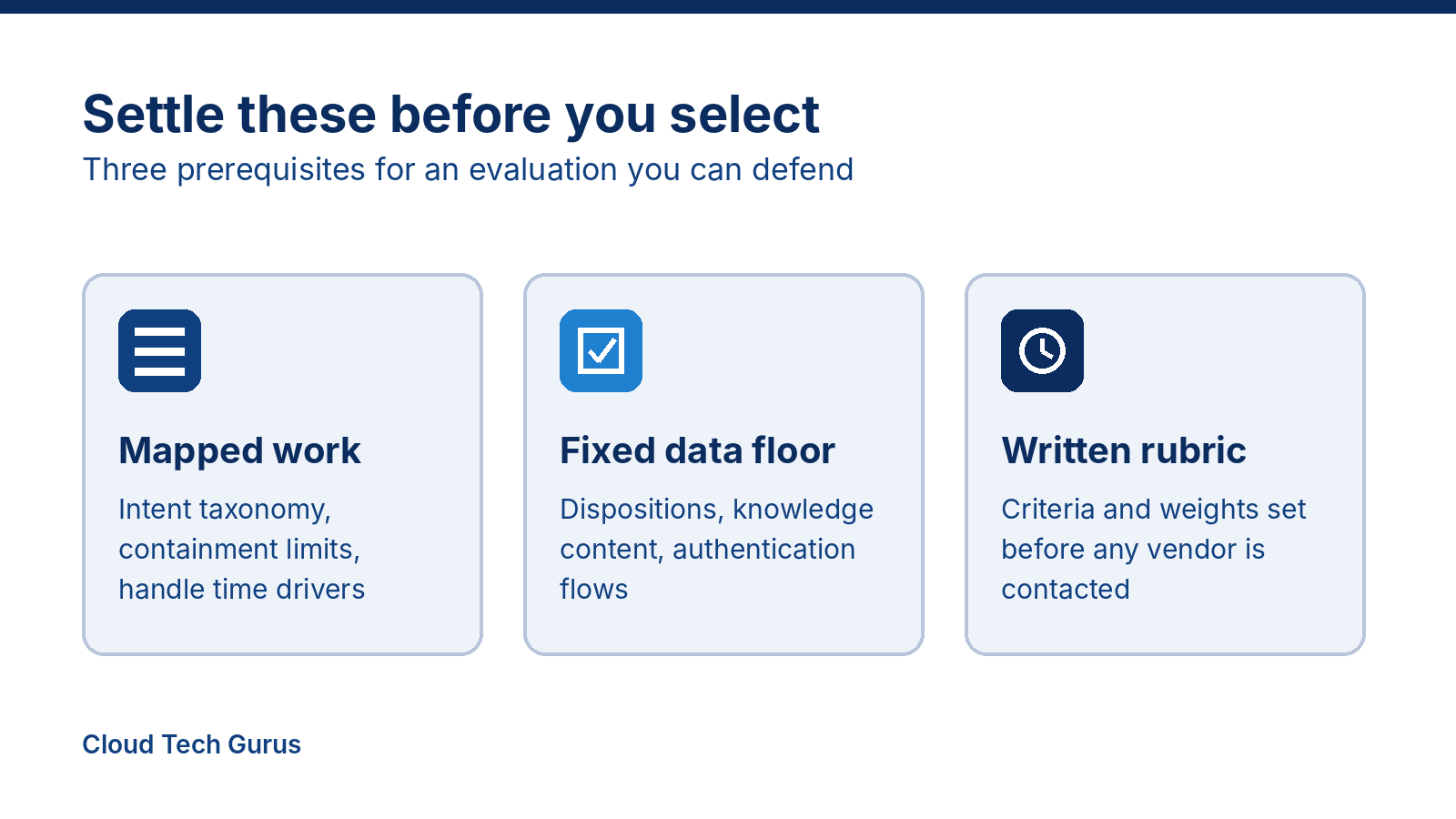
| 1. Buying capability before mapping the work | A new platform is configured to replicate old routing, so first contact resolution does not move | Build the intent taxonomy, identify containment limits, and name the drivers of handle time before selection |
| 2. Outsourcing to escape a problem you still own | A BPO inherits your processes, including a soft QA definition, and you pay for it at scale | Set scope boundaries, SLA design, and calibration standards before the RFP; the RFP is not the strategy |
| 3. Treating AI as a procurement decision | Deflection looks good at launch, then repeat contacts climb as knowledge and dispositions prove unreliable | Assess knowledge hygiene, disposition accuracy, and authentication flow before choosing any model or vendor |
The third one deserves a note. AI readiness is mostly a data and process question. If your dispositions are vague and your knowledge base is stale, a better model will not fix it. It will automate the confusion faster.
What does the right sequence look like?
Order matters more than speed. This is the sequence we would run for an enterprise estate, with durations that vary by size and complexity.
| Step | What you do | Why it comes here |
|---|---|---|
| 1. Define the operating model | Contact mix, intent taxonomy, KPI design, and what “better” measures | Everything downstream is scored against it |
| 2. Assess maturity honestly | Benchmark against peers, not against your own last year | Last year’s number is a flattering baseline |
| 3. Fix the data floor | Dispositions, knowledge base, authentication | Unglamorous, non-negotiable, and the step most teams skip |
| 4. Select | Weighted rubric, same criteria for every vendor, scored on evidence | Now you can judge fit instead of demo polish |
| 5. Sequence the build | Named dependencies and a costed business case, often over several quarters | Dependencies decide the schedule, not enthusiasm |
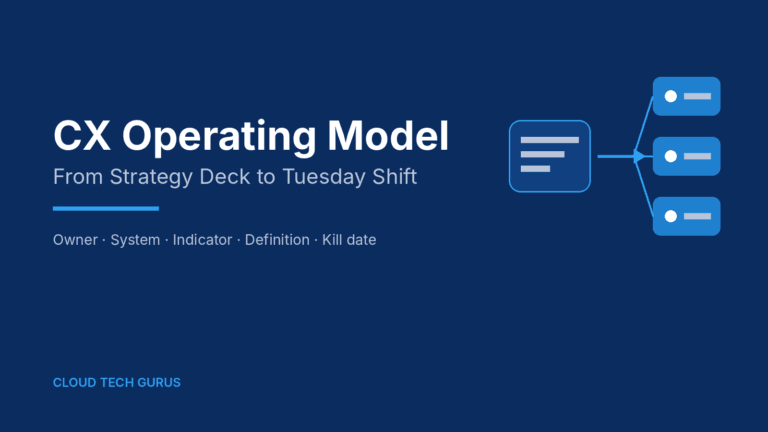
Notice where selection sits. Fourth. Teams that start at step four tend to spend steps one through three after signature, when changes cost the most. If you want the maturity step in detail, our CX operating model guide covers how strategy carries into daily execution.
How do you pressure-test a vendor shortlist?
Whoever builds your shortlist, whether an internal team, an analyst firm, or an advisor, it should be auditable by someone who was not in the room. Five things make it so:
- Criteria and weights in writing first. Typically functional fit, integration burden, 36-month total cost, deployment risk, support model, and roadmap credibility.
- One rubric for every vendor, with evidence cited: a demo observation, a reference call, or documentation.
- Disqualifications documented, not just finalists. Who you eliminated, and why, is the more revealing half of the file.
- The scorecard ships with the recommendation, so procurement, legal, and the board can audit the reasoning.
- The roadmap is portable. If it only works when one advisor implements it, it is not a roadmap.
A shortlist that cannot survive that scrutiny was never an evaluation. It was a preference with a spreadsheet around it. A written vendor evaluation rubric is the simplest place to start.
When is this sequence the wrong call?
When the clock decides for you. A platform end-of-life, a contract expiring inside two quarters, or a regulatory deadline puts you on a burning platform. The order compresses: you source first and fix definitions in parallel.
That is a real tradeoff and it costs you. Expect to renegotiate scope once the gaps surface inside the new platform, and budget for it up front instead of discovering it in a quarterly review. If you have two clear quarters, spend them on steps one through three.
Frequently asked questions
Why do contact center rebuilds fail?
Most fail on sequencing. Teams pick a platform before they define success, map their work, or clean their data, so the new system reproduces the old routing and reporting at higher cost. The software rarely causes it. The order of decisions does, and it is set early, before anyone reads a contract.
What should happen before choosing a CCaaS platform?
Define the operating model, assess maturity honestly, and fix the data floor: dispositions, knowledge content, and authentication flows. Then write a weighted scoring rubric. A platform selected after those steps is judged against your real contact mix instead of a vendor’s feature matrix.
How long should a contact center transformation roadmap run?
For a large enterprise estate, think in quarters, often four to six, with named dependencies and a costed business case. A plan promising two quarters is usually an implementation schedule, not a roadmap. The right length depends on integrations, regulatory exposure, and how much of the operating model is still undefined.
Should we fix our data before migrating to the cloud?
Yes, wherever you can. Migrating inaccurate dispositions, stale knowledge articles, and inconsistent authentication to a new platform reproduces the same problems at higher cost. If a contract expiry forces your hand, fix the data in parallel and budget for rework after go-live.
How do you keep a vendor shortlist auditable?
Write the criteria and weights down before contacting any vendor, score everyone against the same rubric with cited evidence, and document who was eliminated and why. Ship the scorecard with the recommendation so procurement, legal, and leadership can audit the reasoning, not just accept the conclusion.
Where CTG fits
CTG is a vendor-neutral, practitioner-led CX consulting and technology sourcing partner for enterprise contact centers. We start with the definition of “better,” not the demo. If your team is three weeks from a shortlist and cannot state that in a number, that is the work to do first.
When we source technology, scoring criteria are set before vendors are shortlisted, the rubric is written down and auditable, and our commission position on every recommended supplier is disclosed in writing. Vendor-neutral is a claim anyone can make. It is only worth something if you can audit it.
We didn’t study contact centers. We ran them. That is why we ask the sequencing questions before we recommend anything.