
By Cloud Tech Gurus
Compliance in financial services contact centers is critical for ensuring that data is managed securely and that customer interactions meet regulatory standards. With the rise of “Contact Center as a Service (CCaaS) solutions”, organizations are increasingly leveraging technology to enhance customer experience and maintain compliance. This article delves into the essential components of compliance in financial services contact centers, focusing on identity verification, CCaaS migration strategies, and effective risk mitigation practices.
Understanding these elements can help enterprises navigate the complex landscape of compliance requirements while effectively managing customer data and enhancing service delivery. We will explore key regulatory mandates, how best practices can streamline CCaaS migrations, and the role of consulting services in risk management strategies.
What Are Regulatory Compliance Requirements for Financial Services Contact Centers?
Regulatory compliance in financial services contact centers encompasses several critical frameworks that organizations must adhere to in order to protect customer data and maintain operational integrity. These requirements are designed to ensure that customer information is handled appropriately, mitigating risks associated with data breaches and fraud.
Which Key Regulations Impact Financial Contact Center Operations?
Key regulations driving compliance efforts in financial services contact centers include:
- Gramm-Leach-Bliley Act (GLBA): Requires financial institutions to protect sensitive data and provide transparency regarding information sharing.
- Fair Credit Reporting Act (FCRA): Governs the collection and dissemination of consumer information, emphasizing accuracy and privacy.
- Payment Card Industry Data Security Standard (PCI DSS): Outlines critical security measures for handling credit card transactions to prevent fraud and data breaches.
Understanding these regulations is crucial for contact centers to ensure that “customer data” is appropriately safeguarded throughout its lifecycle.
How Do Compliance Frameworks Guide Identity Verification and Risk Management?
Compliance frameworks play a pivotal role in establishing robust identity verification processes and effective risk management strategies. By providing a structured approach, these frameworks help organizations integrate identity verification beyond mere formality, ensuring that methods align with regulatory expectations.
Organizations must adopt a comprehensive framework that prioritizes risk assessment and incorporates advanced identity verification solutions. This results in enhanced customer trust and ensures that the organization meets compliance mandates efficiently.
How Do Identity Verification Solutions Ensure Compliance in Financial Contact Centers?
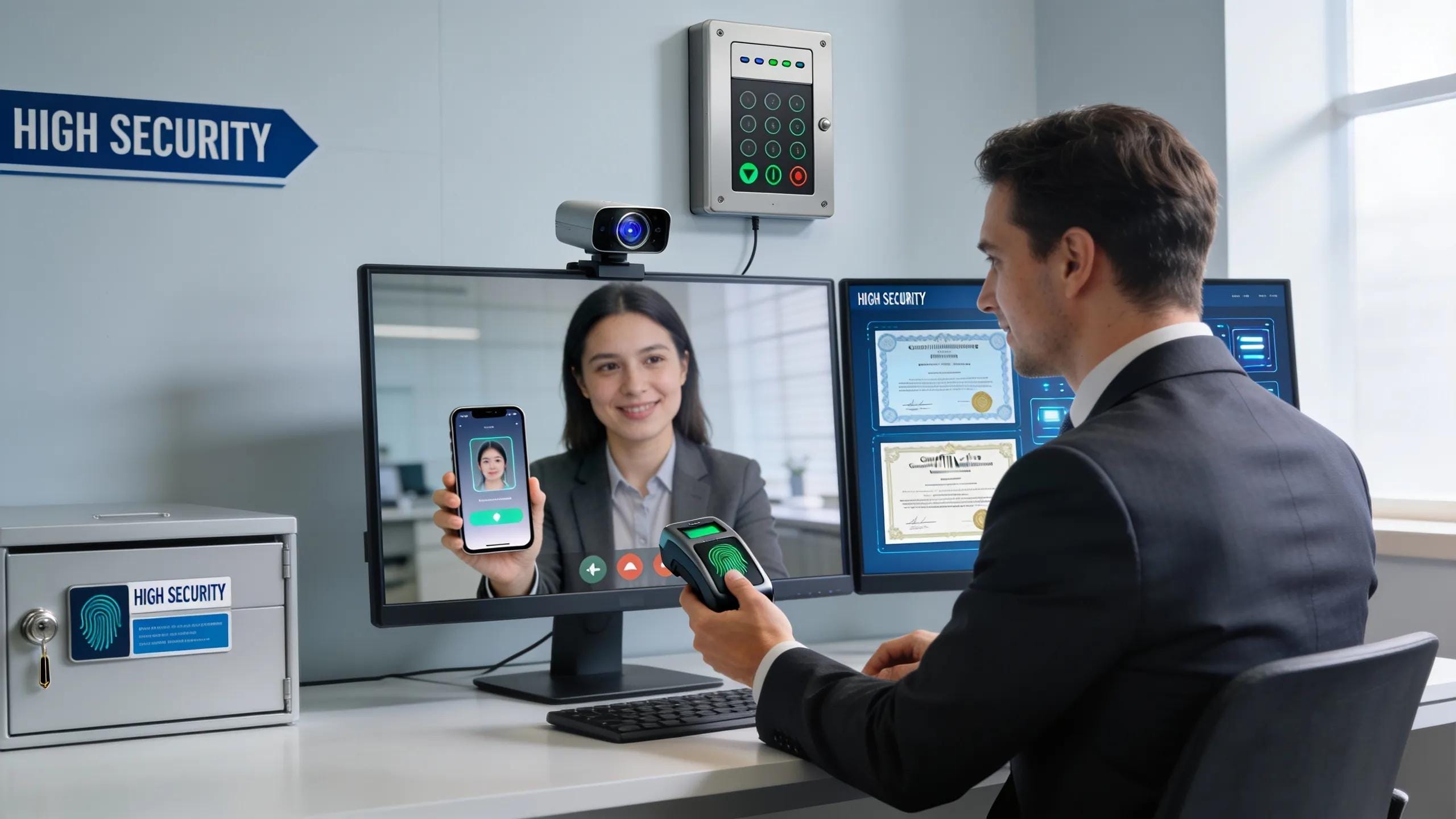
Identity verification solutions are instrumental in maintaining compliance by authenticating customer identities promptly. These solutions utilize advanced technologies to validate the identity of customers, aligning with regulatory requirements to mitigate fraud risks effectively.
How Does Identity Verification Prevent Fraud in Financial Services?
Identity verification solutions employ various technologies to prevent fraud in financial services, including:
- Biometric Authentication: Utilizing unique biological traits such as fingerprints or facial recognition to verify identity.
- Document Verification: Checking the authenticity of identification documents to ensure that they have not been tampered with.
- Real-Time Risk Assessment: Leveraging machine learning algorithms to assess the risk level of a transaction or interaction in real-time.
By integrating these technologies, organizations can significantly reduce occurrences of “identity fraud” and uphold a secure environment for customer interactions.
Advanced security measures are now essential to protect against increasingly sophisticated methods of digital deception.
Risk Mitigation: Combating Deepfake Identity Abuse in Banking
Deepfake-enabled identity abuse has moved from a peripheral cyber-risk to an operational threat for U.S. banking, especially in remote onboarding, account recovery, contact-center authentication, and high-risk payment authorization. Machine learning for identifying deepfake-driven identity abuse, authentication evasion, and customer impersonation in US banking, 2026
What Are Best Practices for CCaaS Migration Strategies in Financial Services?

Migrating to a CCaaS platform can yield numerous benefits, including cost efficiency and enhanced customer experience. However, adhering to best practices during this migration is essential to ensure compliance and mitigate risks. Organizations should consider the following approaches:
- Conduct a Comprehensive Needs Assessment: Understand specific compliance and operational needs prior to selecting a CCaaS provider.
- Ensure Data Encryption: Implement encryption protocols to protect customer data during and after migration.
- Integrate Training Programs: Train staff on compliance requirements and the importance of data protection in the new systems.
These practices are crucial to achieving a seamless migration while maintaining compliance integrity.
Which Technology and Compliance Factors Should Enterprises Prioritize?
As enterprises transition to CCaaS solutions, they must prioritize both technology and compliance factors to ensure a successful integration. Fundamental priorities include:
- Scalability: Choose solutions that can grow alongside your organization’s needs.
- Regulatory Compliance Features: Ensure that the selected CCaaS solution includes built-in compliance features to facilitate adherence to laws.
- Vendor Reputation: Select providers with proven track records in compliance and data security.
By focusing on these factors, organizations can uphold regulatory standards and enhance operational efficiency.
How Can Financial Services Contact Centers Implement Effective Risk Management?
Implementing effective risk management within financial services contact centers requires a proactive approach toward identifying vulnerabilities and enhancing security measures. This involves:
- Regular Risk Assessments: Conduct frequent assessments to identify potential risks and vulnerabilities in data handling and customer interactions.
- Robust Incident Response Plans: Develop comprehensive strategies to address data breaches and non-compliance incidents swiftly.
- Ongoing Monitoring and Auditing: Establish protocols for continuous monitoring of compliance adherence and operational practices.
Such practices are essential for maintaining a robust risk management framework that aligns with regulatory requirements.
How Do Consulting Services Enhance Financial Contact Center Risk Reduction?
Consulting services provide invaluable insights into effective risk management strategies for financial services contact centers. These services can:
- Identify Vulnerabilities: Experts can assess systems and identify potential areas of risk that may otherwise be overlooked.
- Support Implementation of Best Practices: Consulting services guide organizations in adopting industry best practices tailored to their specific needs.
- Measure Risk Management Outcomes: By evaluating existing practices, consultants can provide evidence-based recommendations for improvement, ensuring organizations stay in compliance and enhance customer security.
Partnering with experienced consultants allows financial services contact centers to navigate regulatory landscapes more effectively, ultimately leading to safer and more compliant operations.


